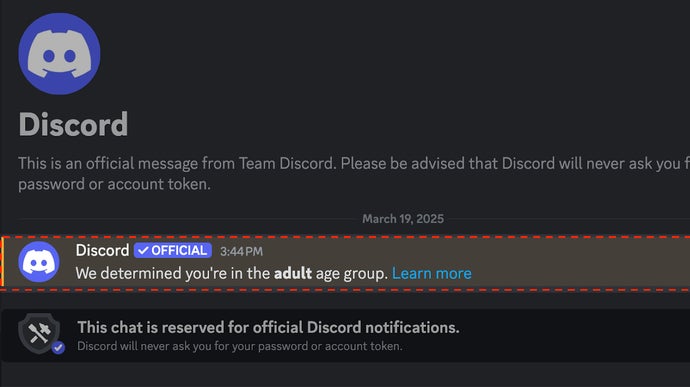
Discord’s age verification era is upon us, despite community backlash
Discord is ushering in a new era of age verification, a move that has been met with significant community apprehension. While the platform acknowledges the user concerns, it has clarified that the vast majority of its user base, approximately 90%, will not be required to undergo the verification process.
The implementation appears to be a response to increasing regulatory pressures worldwide concerning online age restrictions, particularly in relation to servers hosting mature or NSFW content. The primary aim is to ensure compliance with age-gating laws, preventing minors from accessing inappropriate material and creating a safer environment on the platform.
The 'era' signifies an ongoing rollout, rather than a one-time event, indicating that Discord will likely expand or refine its verification methods over time. While the specifics of who exactly will be prompted for verification haven't been exhaustively detailed in the provided context, the implication is that users attempting to access age-restricted content or those flagged by internal systems might be the primary targets. The backlash, despite the 90% figure, suggests a general unease among users regarding privacy, data handling, and the potential for a more restrictive platform experience.
Our take
Live commentary on a developing story, not a final verdict.
Well, well, well, look who's finally cleaning up their act! Discord, the wild west of online communities, is now playing age verification — a development that probably sent shivers down the spine of every mod managing an 'adult' server. The 'community backlash' is almost certainly from those who loved Discord for its relatively hands-off approach to content, or perhaps the privacy maximalists who don't want to hand over their ID to a gaming chat app.
But let's be real, the claim that '90% of users won't have to verify' feels like a classic corporate tightrope walk. It’s enough to calm most people, while still allowing them to target those problematic corners of the platform that always draw regulatory heat. It’s a performative nod to safety without alienating the masses. Will it truly make Discord 'safer,' or just push the most illicit communities further into the shadows? Probably a bit of both, which is typical for platform policy changes.
Ultimately, this is less about user consent and more about corporate survival in a heavily scrutinized digital landscape. Discord, like so many platforms before it, is growing up and realizing that boundless freedom often comes with a hefty regulatory price tag. Prepare for a slightly less chaotic, and perhaps a tad more boring, future on your favorite voice chat app.
This is our take on a developing story, not the final word — read the original reporting at TechCrunch ↗